
What to Say to a Veteran on Veterans Day, and What Not To
Say "Happy Veterans Day," thank them for serving, and add one detail that is only true of them: their branch, their years, or what their service meant to you. "Happy Veterans Day, Uncle Ray. Thank you for your eight years in the Army" beats a bare "thank you for your service" every time, because it shows you know who you are talking to.
The quick answer: a greeting, a thank-you and one personal line, said warmly and briefly. Ask open questions only if they seem to want to talk, never about combat. And if you want them to keep your words, put them in a card: a thank-you said at a barbecue is gone by Thursday, a card goes on the fridge.
Contents
- What should you say to a veteran on Veterans Day?
- What to say instead of "thank you for your service"
- What to say to a veteran in your family
- What to say to a veteran you don't know
- What can you ask a veteran?
- What not to say to a veteran
- How to answer when a veteran brushes off your thanks
- Saying it in writing
What should you say to a veteran on Veterans Day?
Say three things: a greeting, a thank-you and something specific. "Happy Veterans Day" is the right greeting, because Veterans Day, November 11, honors everyone who served in the U.S. armed forces and most of them are here to hear it. The specific part is what makes it personal. It can be their branch, the years they served, a story they once told you, or simply that you are proud of them.
The shape, with an example of each part:
| Part | Example |
|---|---|
| Greeting | Happy Veterans Day, Grandpa. |
| Thanks | Thank you for your service. |
| Something specific | I still think about the stories you told me about Okinawa. |
That's the whole formula, and it works in person, on the phone, in a text or in a card. The one thing to get right is the holiday: Memorial Day, in May, remembers those who died in service. Veterans Day thanks the living. So "Happy Veterans Day" is cheerful and correct, and "Happy Memorial Day" to a living veteran is the one greeting to avoid.
What to say instead of "thank you for your service"
"Thank you for your service" is polite and welcome, but many veterans hear it so often that it washes past them. You don't need to drop it; you need to finish it. Name what you are thanking them for, or what it meant to you.
Lines that go one step further:
| Instead of only... | Try |
|---|---|
| Thank you for your service. | Thank you for your service in the Coast Guard. Twenty-two years is a long time to be ready. |
| Thank you for your service. | Thank you for serving, and for everything your family gave up while you were gone. |
| Thank you for your service. | I'm grateful for what you did, and proud to know you. |
| Thank you for your service. | Happy Veterans Day. I hope someone buys you lunch today. It should be me. |
| Thank you for your service. | Thank you for the years you gave. I don't take them for granted. |
| Thank you for your service. | Thank you for serving. What branch were you in? |
A few more that work for almost anyone:
- "Happy Veterans Day. Thank you for everything you gave."
- "I'm grateful for your service, today and every day."
- "Thank you for serving our country, and for coming home to us."
- "We're proud of you. Happy Veterans Day."
- "Thank you for raising your hand when it counted."
For veterans of the Vietnam era, many of whom came home to no thanks at all, "Welcome home" carries a weight of its own. If you know someone served in Vietnam, saying it, sincerely, is often the most meaningful thing you can offer.
What to say to a veteran in your family
With family, you can say more, because you know the details. Mention a memory, a lesson or what their service shaped in you. A parent or grandparent rarely hears the specific version, and it's the one they remember.
- "Happy Veterans Day, Dad. I've always been proud that you served, and I don't say it enough."
- "Grandma, thank you for your years as an Army nurse. I think about that every time I see a hospital."
- "Happy Veterans Day to my favorite Marine. Semper Fi, and thanks for teaching me to make a bed properly."
- "Thank you for serving, and for coming home to raise us. Everything good in this family started with that."
- "I know you don't like a fuss, so this is the short version: thank you, and I love you."
If the veteran in your family has died, Veterans Day can still be a day to say something to the people who miss them. "Thinking of you today and remembering Dad's service" is enough.
What to say to a veteran you don't know
Keep it brief. A veteran you meet in a store, at a parade or at a restaurant on November 11 is going about their day, so a short, sincere sentence is better than a speech. If you can see a branch, unit or ship name on a hat or jacket, mention it; it shows you looked.
- "Happy Veterans Day, and thank you for serving."
- "I saw your Navy hat. Thank you for your service, sir."
- "Thank you for what you did. I hope today is a good one."
- "Happy Veterans Day. Can I get your coffee?"
Then let them go. If they want to talk, they will, and you can follow their lead with one of the openers below.
What can you ask a veteran?
Good questions are open, easy to answer briefly and about the person, not about the worst day of their life. Most veterans are happy to say what they did and where; far fewer want to describe combat to a near-stranger.
| Good questions | Why they work |
|---|---|
| What branch were you in? | Easy, and most veterans are proud of it. |
| Where were you stationed? | Invites a story about a place, not a battle. |
| What did you do in the service? | Lets them describe their actual job. |
| What made you decide to join? | Personal without being painful. |
| Do you still keep in touch with anyone you served with? | Opens the warmest memories. |
| What do you miss about it? | Often brings out the funny stories. |
If the answer is short, take that as the answer. A veteran who says "I was a mechanic, nothing exciting" is telling you how much they want to share.
What not to say to a veteran
Most mistakes come from curiosity, assumptions or politics. Skip these:
- "Did you ever kill anyone?" Never ask. It is widely considered the worst question you can put to a veteran.
- "Did you see combat?" or "Were you wounded?" If they want to tell you, they will.
- "I could never do what you did" followed by an opinion about the war. Thank the person; leave the policy debate for another day.
- "Happy Memorial Day." Different holiday, for people who died in service.
- "You don't look like a veteran." Veterans are every age and every gender, and plenty of them hear this, especially women who served.
- "Thank you for your sacrifice" to someone whose service you know nothing about. It can assume a loss they didn't have. "Thank you for your service" is safer.
- Guessing their branch or rank. Ask, or leave it out.
How to answer when a veteran brushes off your thanks
Many veterans answer thanks with "It was nothing," "I just did my job" or "The real heroes didn't come home." Don't argue, and don't push for stories. Accept the modesty and keep your reply short and warm:
- "Well, it meant something to me."
- "Still, I'm grateful."
- "Then thank you for doing your job."
- "I understand. Happy Veterans Day all the same."
The goal was to say thank you, and you've said it.
Saying it in writing
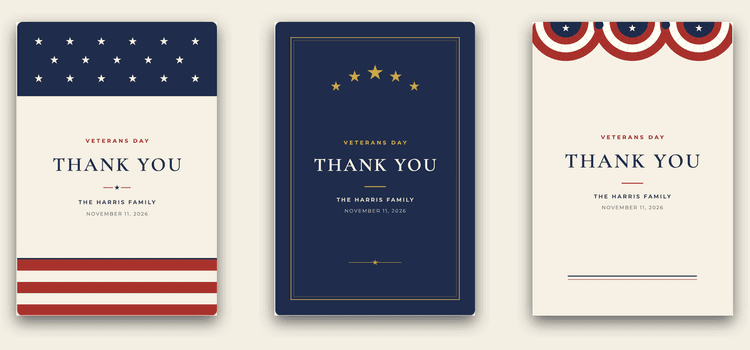
Spoken thanks are lovely and gone in a moment. A card is the version they keep. It also solves the most common problem with Veterans Day thanks, which is that the veterans you most want to thank (a grandfather in another state, an old friend, a former boss) aren't standing in front of you on November 11.
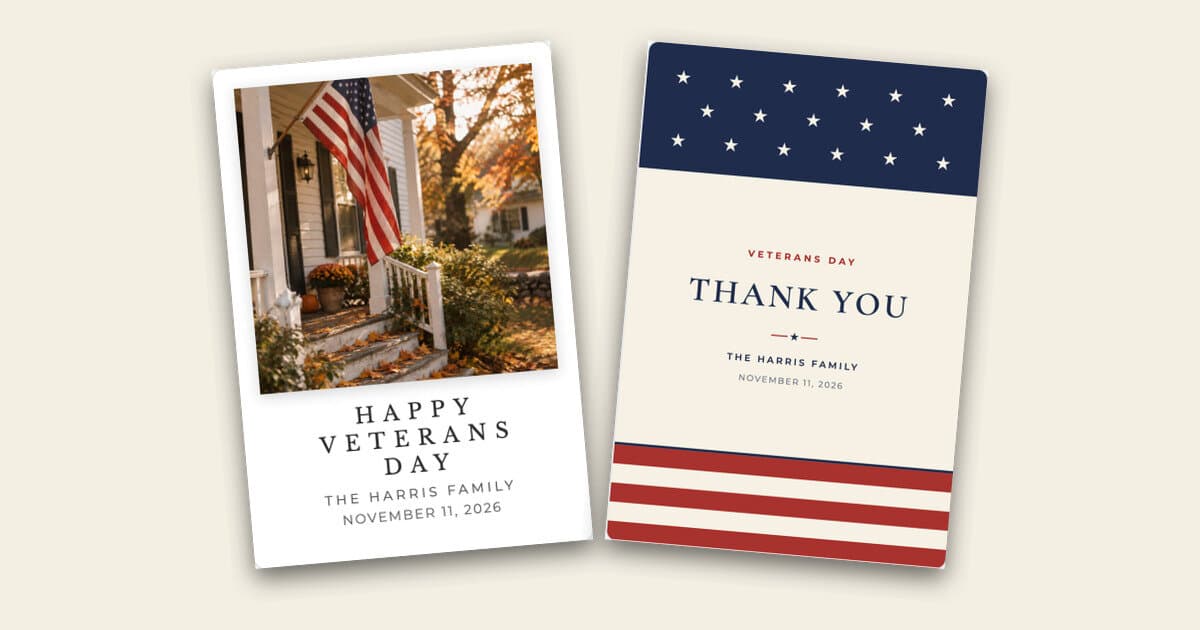
Everything above works on paper: a greeting, a thank-you, one specific line and your name. For ready-made lines sorted by who the card is for, see our 80+ Veterans Day card messages. When you're ready to send them, ShipNote's Veterans Day cards are real postcards with a Veterans Day design or your own photo, printed with your message and mailed for you with First-Class postage. Each card costs $2.49, or $1.99 each from 10 cards, with printing, postage and mailing included.
To have a card arrive by Veterans Day 2026, order by October 29, 2026; orders through November 2 should still arrive on time, but may arrive a day or two after. November 11 is a federal holiday with no regular mail delivery, so the last delivery day before it is Tuesday, November 10. Our guide to how to send Veterans Day cards covers the dates, addressing, and sending one card to every veteran on your list.
Real postcards, printed and mailed for you with First-Class postage. $1.99 a card from 10 cards.
Related reading
- Veterans Day card messages: 80+ ideas for every veteran: what to write, by who the card is for.
- How to send Veterans Day cards: when to mail, how to address them, and writing to veterans you don't know.
- Veterans Day cards, printed and mailed for you: pick a design, paste your list, and every card is mailed with postage.
Ready to mail your thank-yous?
First batch ships next business day. From $1.99 per card. No subscription.
Create Your PostcardsCommon questions
Yes. Veterans Day honors everyone who served, and most of the people it honors are alive to hear it, so Happy Veterans Day is a warm and correct greeting. The greeting to avoid is Happy Memorial Day, because Memorial Day remembers service members who died.
It is polite and almost always welcome, but on its own it can feel automatic. Add one real detail: their branch, how long they served, or what their service means to you. Thank you for twenty years in the Navy lands better than the bare phrase.
Don't argue the point or press for stories. A simple It meant a lot to me, or Well, I'm grateful, lets them accept the thanks on their own terms. Many veterans are modest about their service, and a short warm reply respects that.
Open questions they can answer as briefly as they like: What branch were you in? Where were you stationed? What did you do in the service? How did you end up joining? Avoid questions about combat, injuries or killing, and let them decide how much to share.
Keep it short and specific to the moment: Happy Veterans Day, and thank you for serving. If you see a branch or unit on a hat or jacket, mention it. Then let them go on with their day; a brief, sincere thank-you is the whole point.